Owning a piece of a company and actually running the show are two completely different things. At Alphabet Inc., the corporate parent of Google, that gap is wider than almost anywhere else on Wall Street.
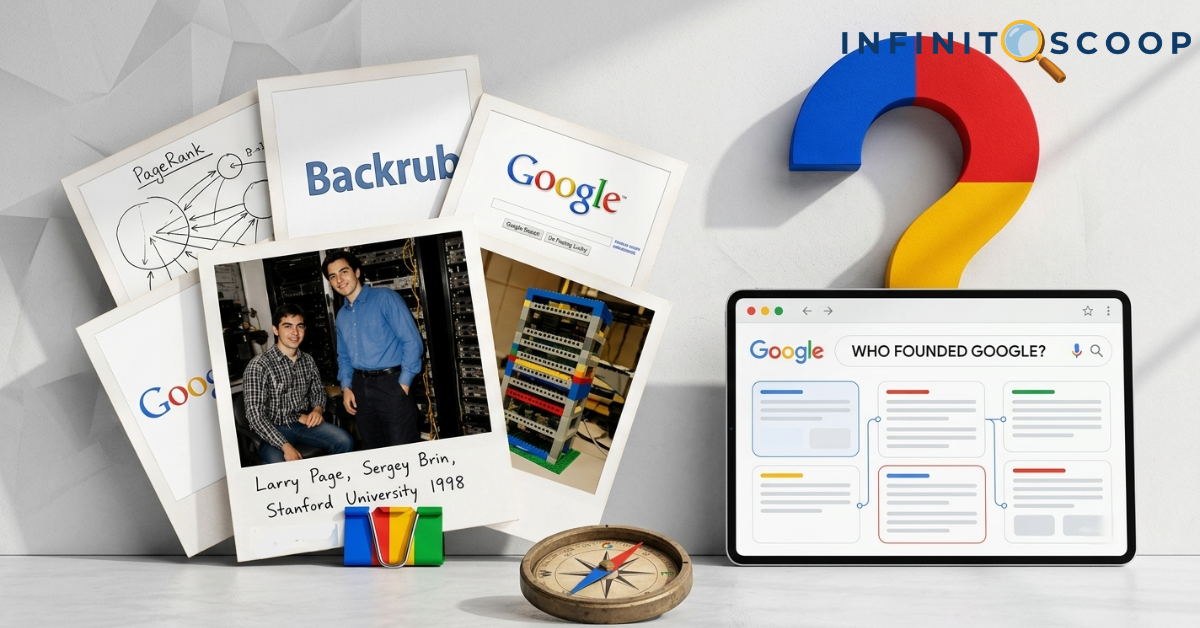
Most people assume that the tech giant answers to its millions of public shareholders and massive Wall Street investment firms. The reality is far more interesting. Real power sits entirely with two people: Larry Page and Sergey Brin, Google’s original co-founders.
Through a clever share structure created before the company ever went public, these two founders hold over 52% of all voting power. According to Alphabet’s April 2026 filings with the U.S. Securities and Exchange Commission (SEC), Page controls 27.4% of the votes, while Brin holds 25.3%. Together, they call all the shots.
Alphabet Inc. Ownership Snapshot
While millions of people own a piece of the company, the voting power remains locked at the top. Here is how the economic stakes compare to actual voting control as of early 2026:
| Holder | Economic Stake | Voting Power |
| Larry Page | ~3–4% | 27.4% |
| Sergey Brin | ~3–4% | 25.3% |
| Vanguard Group | ~7% | ~7% (Class A only) |
| BlackRock | ~6.2% | ~6.2% (Class A only) |
| Sundar Pichai | Below 1% | Below 1% |
| Public Investors | Majority | ~36% combined |
Source: Alphabet Inc. SEC Proxy Statement, April 2026.
What Exactly Is Alphabet (And Is It the Same as Google)?
Alphabet Inc. is a holding company that acts as the legal parent of Google. It was born in October 2015 during a massive corporate shakeup designed to separate Google’s core internet business from its wilder, long-term experiments.
By 2015, Google had grown far beyond a simple search bar. It owned massive platforms like YouTube, Android, Gmail, and Google Maps. At the same time, the founders were pouring money into “moonshot” projects like self-driving cars, drone delivery, and life sciences. Mixing these together made it incredibly tough for investors to see the true financial health of the core business.
The creation of Alphabet fixed this. Google LLC became a subsidiary focused purely on Search, YouTube, Android, Cloud, and advertising. Everything else moved under a separate umbrella called “Other Bets.”
Legally, Alphabet owns Google, not the other way around. When you buy stock on the market, you are buying a piece of Alphabet Inc. Google itself has no independent stock listing. Because Google brings in roughly 95% of the total revenue, people use the names interchangeably, but they are separate legal entities.
Key Company Facts
- Founded: October 2, 2015
- Founders: Larry Page and Sergey Brin
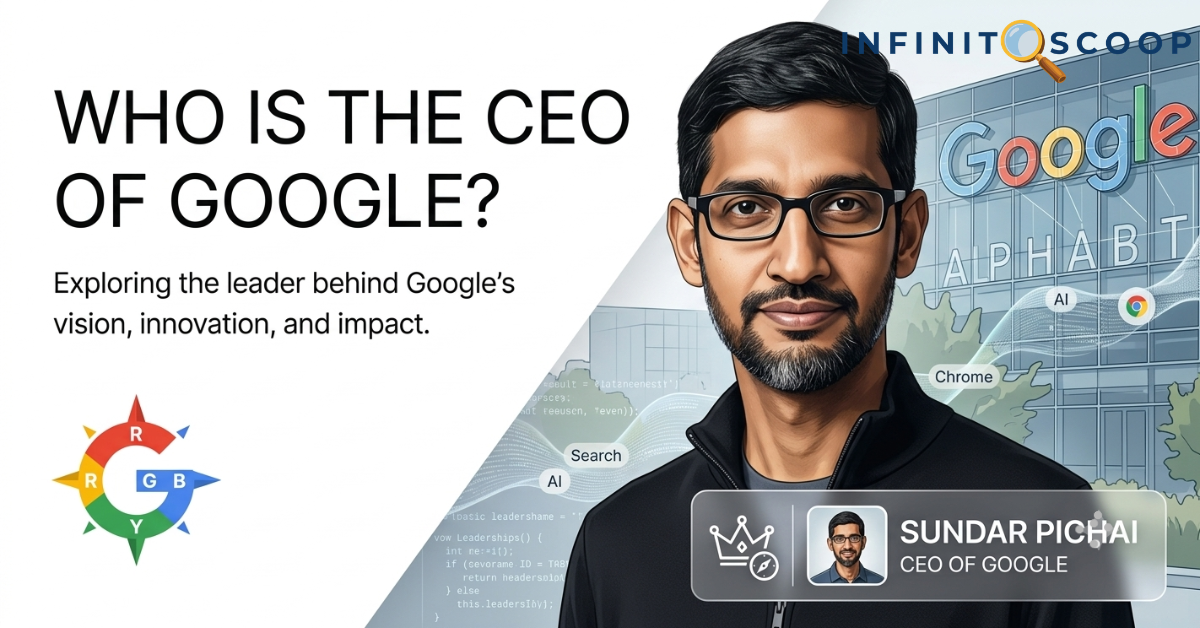
- CEO: Sundar Pichai
- Headquarters: Mountain View, California
- Stock Symbols: GOOGL (Class A), GOOG (Class C)
- Market Capitalization: ~$4.6 trillion (As of May 2026)
- Annual Revenue: ~$422 billion (FY2025)
The Three Share Classes: How the Founders Retain Control
How do Page and Brin maintain an absolute majority while owning a small percentage of the actual company value? The secret lies in a system of three distinct share classes:
Class A Shares (Ticker: GOOGL)
These are the standard shares available to everyday investors through any brokerage app. Each share gives you exactly one vote. There are roughly 5.82 billion of these shares out in the wild.
Class B Shares (Not Publicly Traded)
This is where the real power lives. These shares are not listed on any stock exchange and cannot be bought for any price. Each Class B share commands a massive 10 votes. Larry Page and Sergey Brin hold the vast majority of these, giving them nearly 90% of all Class B stock.
Class C Shares (Ticker: GOOG)
These shares give investors full economic rights, meaning you profit when the stock price goes up, but they offer exactly zero votes. The company introduced these to reward employees and fund acquisitions without diluting the founders’ voting power.
GOOG vs. GOOGL: Which One Should You Buy?
For the average retail investor, the choice between the two public tickers comes down to a simple question: do you care about having a vote?
- GOOGL (Class A) gives you one vote per share.
- GOOG (Class C) gives you zero votes.
Both tickers trade on the Nasdaq and offer identical financial exposure to the company’s growth. Because the founders hold an ironclad voting majority, no amount of Class A shares bought by the public can ever change a corporate vote. However, if participating in shareholder meetings matters to you, GOOGL is the proper choice.
Stepping Down Without Giving Up Power
In December 2019, Larry Page and Sergey Brin stepped back from their daily executive roles. Sundar Pichai took over as CEO of both Google and Alphabet. While many viewed this as the end of an era, nothing changed behind closed doors.
The founders kept every single one of their Class B shares. Their 52.7% voting majority stayed completely intact. While operational control shifted to Pichai, ultimate governance stayed at the top.
Because of this setup, Page and Brin can still:
- Approve or block any massive corporate acquisition.
- Handpick or fire members of the board of directors.
- Overrule any objections from giant Wall Street hedge funds.
- Replace the CEO at a moment’s notice.
This mirrors how Mark Zuckerberg runs Meta. The strategy allows tech founders to focus on long-term goals and massive AI projects like Gemini and DeepMind without worrying about short-term Wall Street pressure.
Frequently Asked Questions (FAQs)
Who owns the largest stake in Alphabet?
By economic value, giant index funds like Vanguard (~7%) and BlackRock (~6.2%) own the largest slices of the company. However, by actual voting power, co-founders Larry Page (27.4%) and Sergey Brin (25.3%) hold majority control.
Does Google own Alphabet?
No, it is actually the reverse. Alphabet Inc. is the parent holding company, and Google LLC operates as its largest wholly-owned subsidiary.
Why do the founders still control the company if they stepped down as executives?
Corporate control at Alphabet is tied directly to share classes, not job titles. When Page and Brin stepped down in 2019, they kept their private Class B shares, which carry 10 votes per share. This allows them to retain a 52.7% voting majority from the sidelines.
What companies fall under the Alphabet umbrella?
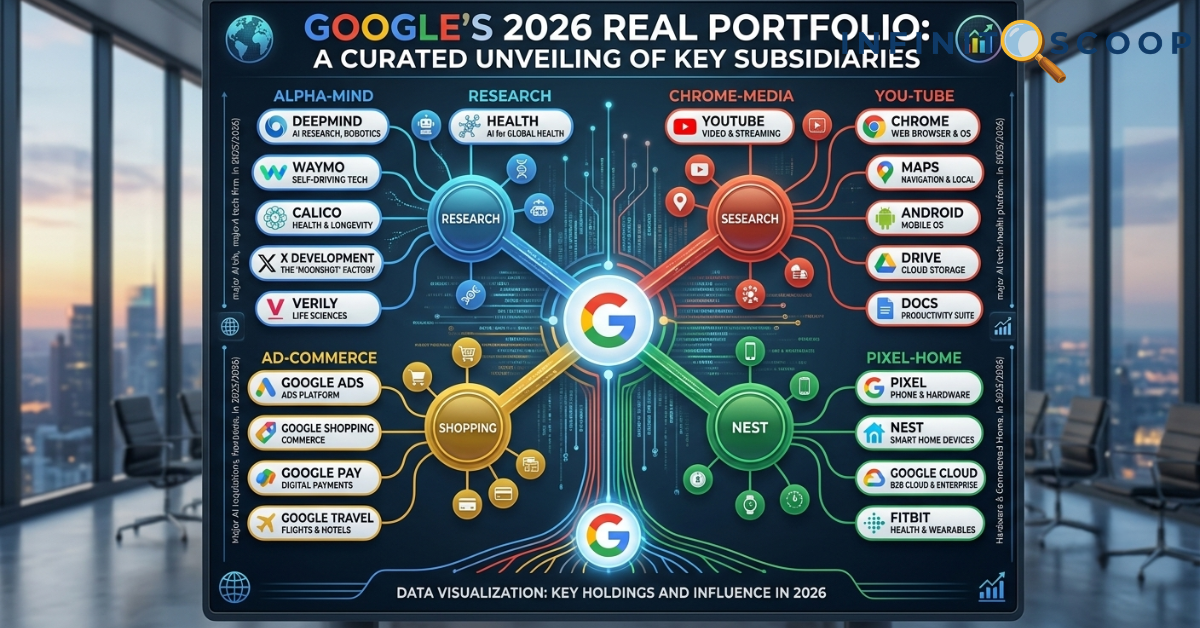
Alphabet splits its business into Google LLC and “Other Bets.” Google handles Search, YouTube, Android, Google Cloud, and AI divisions like Google DeepMind. Other Bets includes forward-looking companies like Waymo (autonomous vehicles), Verily (life sciences), and Wing (drone delivery).