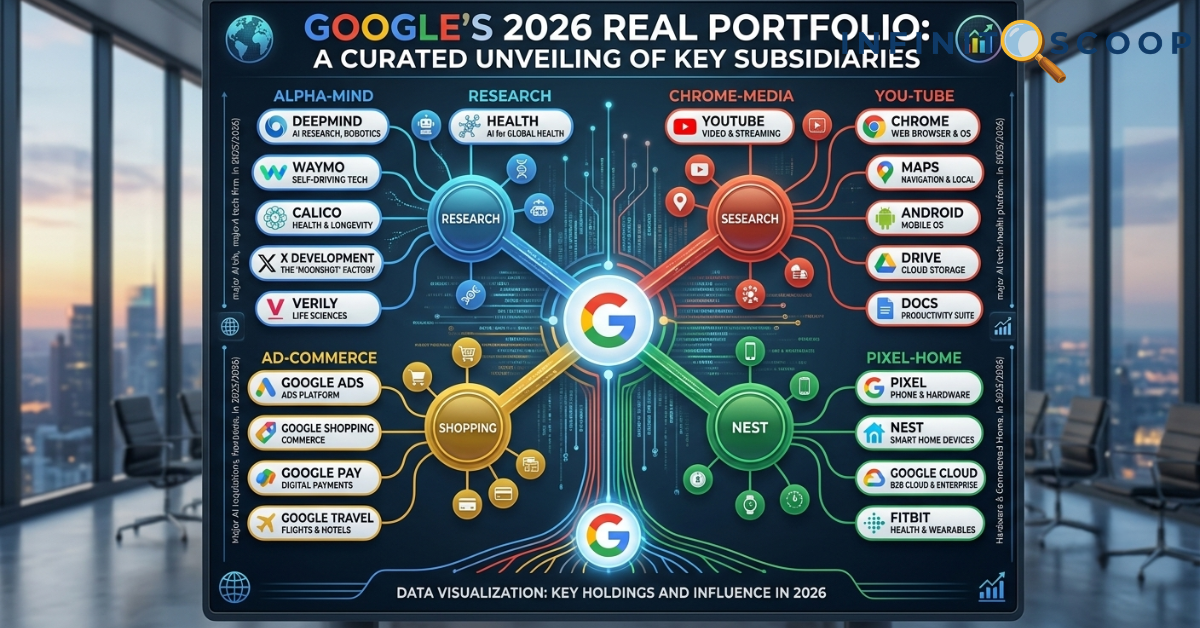
When you think of Google, you probably think of a simple search bar. But behind that clean white homepage lies one of the largest corporate empires in human history. The list of companies owned by Google in 2026 stretches far beyond web search, shaping how we communicate, work, and navigate the physical world.
Understanding this vast ecosystem helps you see where technology is heading next. Alphabet, Google’s parent company, continues to buy and build businesses that touch almost every aspect of modern life. Let’s look at the major players making up this massive digital portfolio this year.
The Pillars of the Google Ecosystem
At the core of Google’s network are the massive platforms you likely use every single day. These aren’t just standalone apps anymore; they are foundational pillars of the global internet infrastructure.
YouTube remains the crown jewel of Google’s media acquisitions. Bought way back in 2006 for what now seems like a bargain, it dominates the streaming space in 2026. It drives a massive portion of the company’s ad revenue while expanding heavily into live television and creator-led commerce.
Android is another foundational asset that powers over 70% of the world’s smartphones. By owning the operating system, Google ensures its suite of apps comes pre-installed on billions of devices globally. This ecosystem keeps users locked into Google services from the moment they wake up.
Smart Home and Wearable Technology
Google isn’t just a software company anymore. Over the last decade, strategic purchases allowed the tech giant to move aggressively into consumer hardware and smart home automation.
Fitbit and Wearable Health
Google completed its acquisition of Fitbit to compete directly with Apple in the health tracking space. In 2026, Fitbit technology deeply integrates with Google’s premium Pixel hardware, creating a seamless health data ecosystem for fitness enthusiasts.
Nest Home Automation
Nest started as a smart thermostat company, but under Google, it expanded into a complete home security brand. Today, Nest devices serve as the physical anchors for Google Assistant and Gemini AI in millions of households across the United States.
Mapping and Navigation Monopolies
If you try to find a business or get driving directions, you are almost certainly using a tool owned by Google. The company effectively controls the digital mapping market through two distinct, massive brands.
Google Maps handles the foundational data, business listings, and street-view imaging. It serves as the data backbone for countless other apps, from ridesharing to food delivery services.
Waze operates alongside Maps but keeps its unique identity. Google bought Waze to capture its active, community-driven traffic reporting. By keeping both apps alive, Google captures different types of users while feeding the same central data engine.
The Massive Scale of Alphabet’s Holdings
| Company / Brand | Core Industry | Year Acquired | Primary Function Today |
| YouTube | Video Streaming | 2006 | Global video distribution and ad platform |
| Android | Mobile Software | 2005 | Operating system for global mobile devices |
| Nest | Smart Home | 2014 | Connected thermostats, cameras, and hubs |
| Fitbit | Wearables | 2021 | Fitness tracking and digital health metrics |
| Waze | Navigation | 2013 | Crowd-sourced traffic and map data |
| DeepMind | Artificial Intelligence | 2014 | Core research driving Google’s advanced AI |
Emerging Tech and the Future Portfolio
Looking beyond consumer apps, Google invests heavily in enterprise tools and future technologies. Look at corporate data management, and you will find Google Cloud powering top global businesses. Look at cybersecurity, and you will find Mandiant, a massive defense firm Google bought to protect cloud infrastructure from global threats.
Then there are the “Other Bets” under the Alphabet umbrella. Waymo leads the autonomous vehicle race, operating driverless taxi services in major US cities right now. Verily tackles life sciences, trying to use data to personalize healthcare. These projects might lose money today, but they represent the next generation of companies owned by Google in 2026.
Summary
Google evolved from a simple college research project into a sweeping corporate web. By acquiring market leaders in video, mobile software, smart hardware, and mapping, the company built an inescapable digital footprint. As AI and automated transport grow, this portfolio will only expand further into our daily routines.
Frequently Asked Questions (FAQs)
Does Google own YouTube in 2026?
Yes, Google purchased YouTube in 2006 for $1.65 billion. Today, it remains one of Google’s most profitable and influential subsidiaries.
What is the difference between Google and Alphabet?
Alphabet is the parent holding company created in 2015. Google is the largest subsidiary under Alphabet, housing search, maps, ads, YouTube, and Android.
Does Google own Waze and Google Maps at the same time?
Yes, Google owns both mapping applications. It bought Waze in 2013 but keeps it as a separate app because of its unique, crowd-sourced traffic features.