
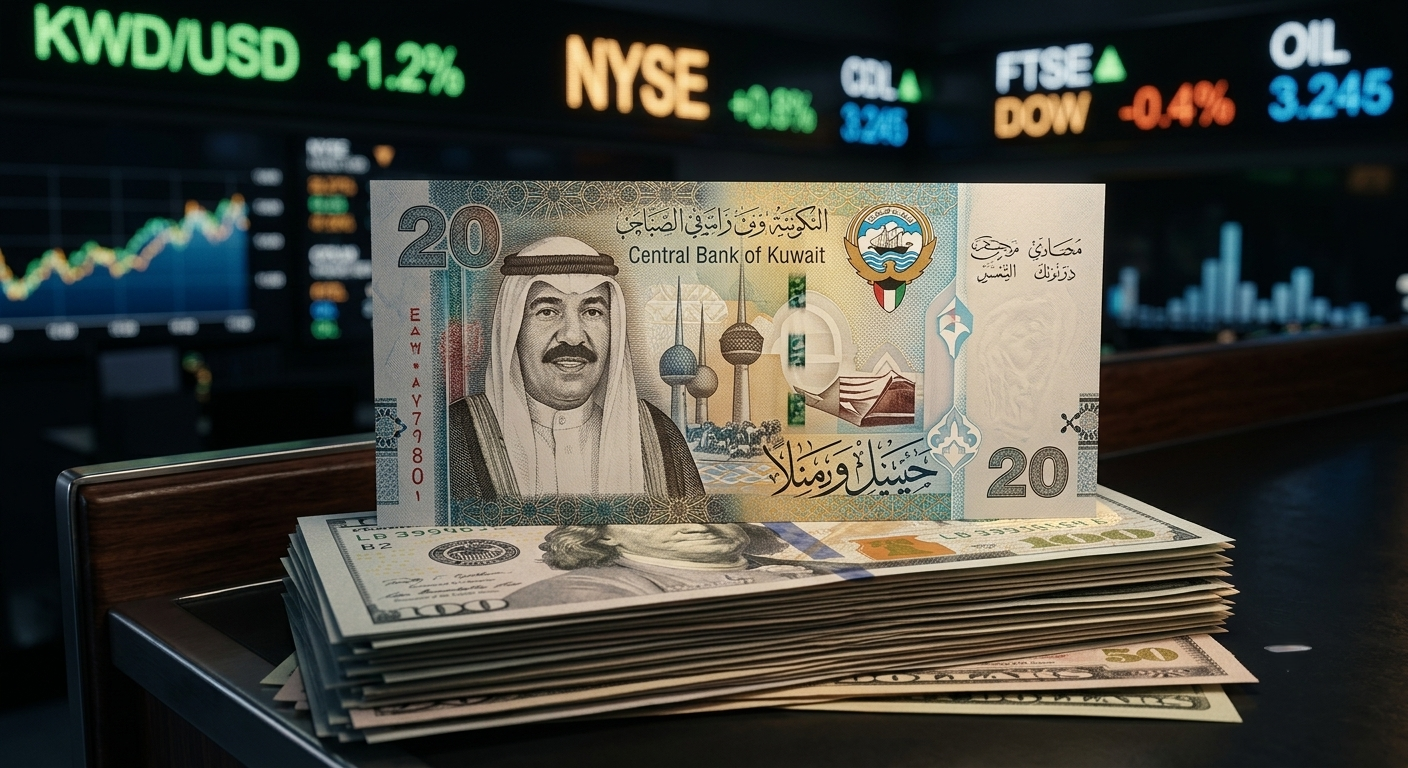
When most people think of financial power, they immediately picture the US Dollar, the Euro, or the British Pound. But if you look at raw exchange rates, the global leaderboard looks completely different. In fact, the world’s most valuable currency belongs to a nation with a smaller population than many US cities.
Understanding why these specific currencies command such high prices offers a fascinating look into global trade, natural resources, and clever economic engineering. Here is a breakdown of the elite currencies leading the global market.
High Exchange Value vs. Global Dominance
Before looking at the rankings, it helps to clear up a common mix-up: a currency’s exchange value is not the same as its global power.
A high-value currency simply means it takes fewer units of that money to buy one US Dollar. It does not mean the currency is widely used in global trade. The US Dollar remains the undisputed king of the global financial system because it acts as the primary reserve currency for central banks worldwide, even if individual bills are worth less than a handful of Middle Eastern currencies.
The Definite Leaderboard: Top 10 Currencies Ranked
The global standings are dominated by small, oil-rich nations and European financial hubs. These countries use controlled monetary policies and massive export revenues to shield their money from inflation.
| Rank | Currency Name (Ticker) | Primary Driver of Value | Algorithmic Status |
| 1 | Kuwaiti Dinar (KWD) | Massive oil exports and sovereign wealth | Floating basket peg |
| 2 | Bahraini Dinar (BHD) | Energy revenues and strategic diversification | Fixed US Dollar peg |
| 3 | Omani Rial (OMR) | Energy exports and strict fiscal policy | Fixed US Dollar peg |
| 4 | Jordanian Dinar (JOD) | Government price controls and stability | Fixed US Dollar peg |
| 5 | British Pound Sterling (GBP) | Global financial hub and diverse economy | Free-floating market |
| 6 | Cayman Islands Dollar (KYD) | Offshore banking and strict financial laws | Fixed US Dollar peg |
| 7 | Swiss Franc (CHF) | Ultimate safe-haven asset, low inflation | Free-floating market |
| 8 | Euro (EUR) | Combined economic weight of the Eurozone | Free-floating market |
| 9 | US Dollar (USD) | Global reserve currency and trade standard | System benchmark |
| 10 | Canadian Dollar (CAD) | Natural resources and strong trade ties | Free-floating market |
Why Oil and Currency Pegs Control the Top Spots
The dominance of Middle Eastern nations on this list comes down to a deliberate economic strategy. Nations like Kuwait, Bahrain, and Oman generate billions of dollars by exporting oil. This steady flood of foreign cash gives their governments the financial reserves needed to back up their money.
To keep things steady, many of these countries use a “currency peg.” They tie the value of their local money directly to the US Dollar at a fixed, artificially high rate. This strategy protects their local economies from wild market swings, keeps inflation incredibly low, and makes imports highly affordable for their citizens.
Frequently Asked Questions (FAQs)
Why is the Kuwaiti Dinar worth so much more than the US Dollar?
Kuwait holds some of the largest oil reserves on the planet. The massive demand for its oil exports fills the government’s cash reserves, allowing them to tightly control and defend the high value of the Dinar against other global currencies.
Does a stronger currency mean a country has a healthier economy?
Not necessarily. A high exchange rate makes importing foreign goods cheaper, but it also makes a country’s exports much more expensive for overseas buyers. Many manufacturing-heavy nations prefer a weaker currency to keep their products competitive on the international market.
Why is the Swiss Franc considered a safe-haven currency?
Switzerland combines strict banking privacy laws, low inflation, and a highly stable political environment. When global markets get shaky, international investors rush to buy Swiss Francs to protect their wealth from market crashes.