Many people think of Facebook as just another social media network. But today, it is part of a massive tech empire. When you look at who owns Facebook in 2026? The Complete Ownership & Control Guide, the answer involves a mix of public shareholders and one very powerful individual.
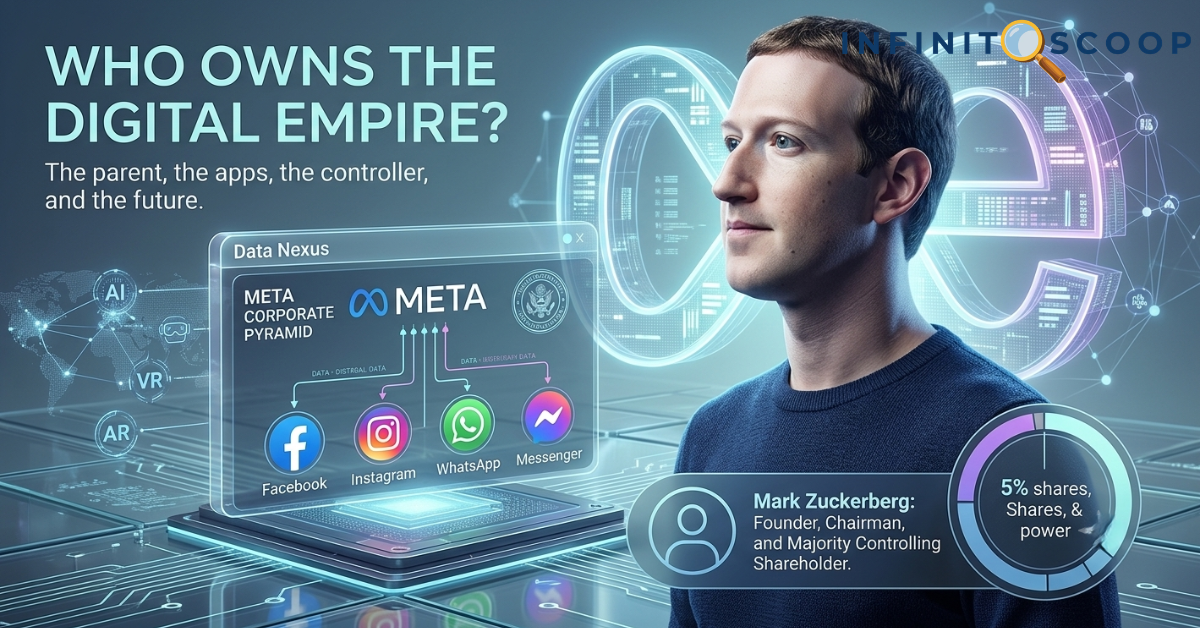
The company behind the app is Meta Platforms, Inc. This parent corporation owns Facebook, Instagram, WhatsApp, and Threads. While thousands of people invest in the company, a unique stock structure keeps the ultimate decision-making power in very few hands.
Understanding the Meta Corporate Structure
Meta operates as a publicly traded company on the NASDAQ exchange under the ticker symbol META. This means everyday investors, retirement funds, and massive financial institutions own shares. Anyone can buy a piece of the company through a brokerage account.
However, owning shares does not mean you get a say in how the platform runs. Meta splits its stock into two distinct categories. Class A shares belong to the public and give investors one vote per share. Class B shares are held by insiders and offer ten votes per share.
This dual-class setup changes the entire game of corporate governance. It allows early founders and top executives to maintain control. Even if the public buys up most of the available stock, they cannot outvote the inner circle.
Mark Zuckerberg and the Reality of Control
You cannot talk about who owns Facebook in 2026? The Complete Ownership & Control Guide without focusing on Mark Zuckerberg. He co-founded the platform in his college dorm room and remains the face of the company. Today, his role is more secure than almost any other tech CEO.
Zuckerberg owns a massive portion of the Class B stock. Because of the ten-to-one voting rule, he commands roughly 61% of the total voting power. Even though he does not own a majority of the actual company assets, he holds the final word on every single major decision.
This means Zuckerberg can choose the board of directors, alter the company mission, or pivot to new technologies. If the entire public stock market disagrees with his vision, they cannot legally force a change. He controls the future of the app.
The Major Institutional Investors
While one man holds the voting power, large financial institutions own the largest financial stake. These companies manage billions of dollars for millions of regular citizens. They buy massive amounts of Class A shares to growth-proof their portfolios.
The biggest institutional shareholders include:
- Vanguard Group: This investment giant holds a top spot in Meta ownership, managing funds for everyday savers.
- BlackRock: Another massive asset manager that controls a huge percentage of public shares.
- Fidelity Investments: This firm holds millions of shares across its various mutual funds and tech ETFs.
These institutions frequently push for changes in privacy policies or ad models. However, they must always work alongside Zuckerberg to get anything done.
Comparing Share Types and Influence
| Stock Class | Who Owns It | Votes Per Share | Total Influence |
| Class A | Public Investors & Institutions | 1 Vote | Low Voting Power |
| Class B | Mark Zuckerberg & Insiders | 10 Votes | 61% Total Control |
The Role of the Board of Directors
The board of directors supervises the executive team. They handle executive pay, overall business strategy, and major policy shifts. However, because Zuckerberg controls the voting power, he essentially picks the board members.
The current board features a mix of tech veterans, financial experts, and defense specialists. They offer advice and guidance, but they rarely oppose the CEO. The structure ensures the company moves fast without corporate gridlock.
Final Thoughts
The ownership of Facebook is a tale of two different worlds. On paper, public investors and huge Wall Street institutions own the financial value of the platform. In reality, Mark Zuckerberg retains absolute control over the company destiny through special voting shares.
Frequently Asked Questions (FAQs)
Can shareholders fire Mark Zuckerberg?
No, public shareholders cannot fire him. His Class B shares give him over 60% of the voting power, making him immune to hostile takeovers or shareholder revolts.
Does Meta own Instagram and WhatsApp too?
Yes, Meta Platforms is the parent company for all three apps. They purchased Instagram in 2012 and WhatsApp in 2014.
Can I buy a piece of Facebook today?
Yes, you can buy Class A shares of Meta Platforms through any standard online stock brokerage under the ticker META.