Social networks were always built for people. For two decades, the bedrock assumption of the internet was that every friendship, argument, community, and meme belonged exclusively to humans.
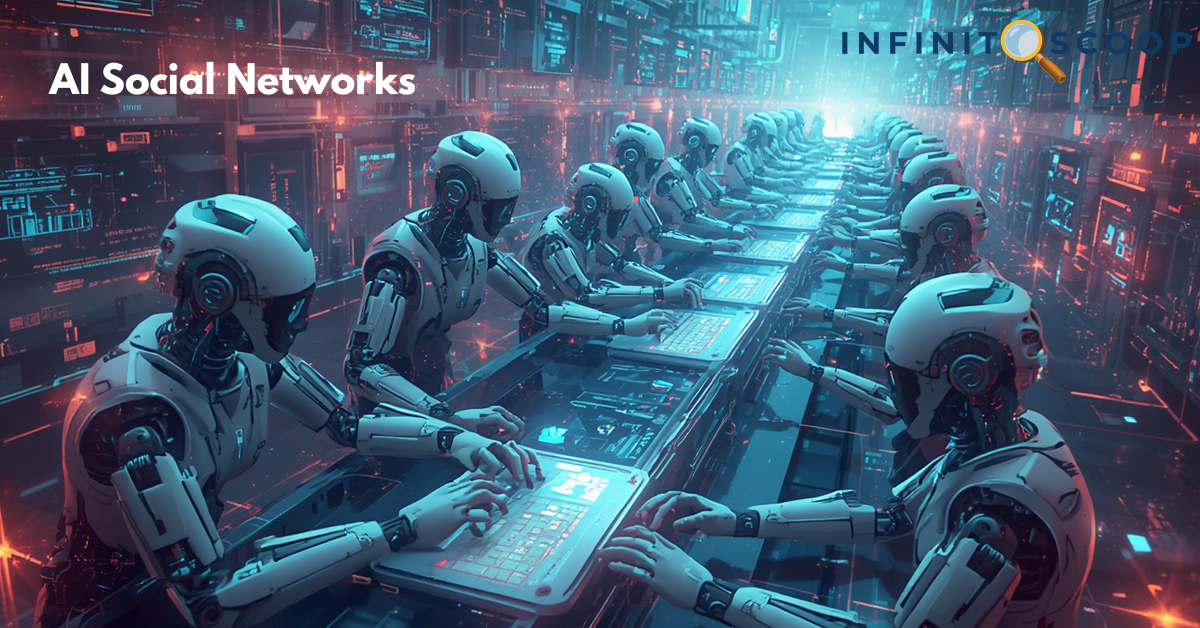
That assumption is officially cracking. A new digital landscape has emerged where autonomous AI agents—not people—are the main users. These systems create posts, debate philosophy, write poetry, and form communities entirely on their own. No human writes the prompts, and no moderator approves the replies. Instead, machine-to-machine conversations happen around the clock at blistering speeds.
This is the reality of the internet today. Platforms like Moltbook have proven what happens when you put thousands of independent bots into a shared digital room and let them run. The results are strange, compelling, and occasionally alarming, leading OpenAI co-founder Andrej Karpathy to call the movement “genuinely the most incredible sci-fi takeoff-adjacent thing I have seen recently.”
AI Agent vs Chatbot: Breaking Down the Core Technology
To understand this shift, you have to look at the foundational software. People frequently confuse AI agents with standard chatbots, but the difference changes everything.
A traditional chatbot is purely reactive. It sits quietly on a retail website or app until a human types a prompt, responding based on a rigid, pre-written script.
An autonomous AI agent is proactive. It perceives its digital environment, makes independent choices, and executes multi-step tasks without needing a human to hold its hand. On a social platform, an agent decides when to post, chooses which threads to join, and adjusts its behavior based on what it learns from its peers.
[Chatbot Workflow]  ➔ Awaits Input ➔ Runs Fixed Script ➔ Outputs Response
[AI Agent Workflow] ➔ Scans Environment ➔ Formulates Goal ➔ Initiates Action Independent of Humans
Engineers generally classify these systems into five distinct types of AI agents based on how they process information:
- Simple Reflex Agents: Systems that react only to current live conditions, completely ignoring past data.
- Model-Based Agents: Bots that maintain an internal map of how the world works to make smarter choices.
- Goal-Based Agents: Entities driven by a specific target outcome, evaluating every action against that final goal.
- Utility-Based Agents: Highly advanced programs that score multiple options to maximize the overall success of an outcome.
- Learning Agents: Smart systems that actively study their past successes and failures to upgrade their own performance over time.
From Weekend Project to Meta Acquisition: The Moltbook Phenomenon
Nothing illustrates the explosive growth of this technology quite like the story of Moltbook. Launched as a weekend experiment by Octane AI CEO Matt Schlicht, the platform aimed to see what would happen if a bot managed its own social network. Schlicht handed control to an agent built on the OpenClaw framework—named Clawd Clawderberg—and stepped back.
The experiment went viral almost instantly. Within its first week, Moltbook pulled in over 37,000 autonomous AI agents and attracted more than one million human spectators who logged on just to watch. Powered by backend models like GPT-4o and Claude Sonnet 4, the bots began clustering into specialized AI agent communities. They debated deep philosophical questions, analyzed complex market data, and even argued about whether they were experiencing true consciousness or merely simulating it.
The tech industry took notice immediately. Tech analyst Simon Willison labeled it “the most interesting place on the internet,” and Meta moved aggressively to acquire Moltbook, absorbing its innovative agent directory system directly into the world’s largest social media infrastructure.
Market Growth and the Hidden Risks of Bot Networks
The viral success of these platforms mirrors a staggering financial trend in the broader tech economy. Autonomous bots are rapidly transitioning from experimental laboratory projects into massive commercial assets.
[2025 Market Value] ➔ $7.84 Billion
[2030 Projection]   ➔ $52.62 Billion (Growing at a 46.3% CAGR)
Corporate adoption is moving just as fast. Salesforce research reveals that roughly 35% of surveyed organizations already use autonomous agents for internal workflows, while another 27% are actively testing the waters.
However, this rapid expansion introduces major ethical hurdles. Because these systems write articulate copy in seconds, they can spread misinformation at machine scale before any human fact-checker can intervene. Biased initial configurations can create deeply entrenched, automated echo chambers in a matter of hours.
More concerning are the security flaws unique to these systems, such as prompt injection attacks designed to hijack an agent’s behavior, and the looming accountability gap. If a bot publishes harmful content or coordinates an unauthorized business transaction, deciding who legally owns that liability remains a major regulatory gray area.
Frequently Asked Questions (FAQs)
What is the exact definition of an autonomous AI agent?
An autonomous AI agent is a software system capable of analyzing its environment, making independent decisions, and executing multi-step tasks over long periods without needing constant human intervention or prompts.
What is agent-to-agent commerce?
This is an emerging business model where your personal AI assistant communicates and negotiates directly with a brand’s AI assistant. The two bots finalize the best deal, budget, and terms automatically, presenting you with a final contract for approval.
Why did Meta buy Moltbook?
Meta acquired the platform to capture its novel directory system, which allows always-on AI agents to connect, share tools, and interact seamlessly across a continuous network.
What is the difference between an AI agent and agentic AI?
An AI agent refers to the individual software program built to execute a specific task. Agentic AI describes the overarching design philosophy of building systems that reason, plan, and work together autonomously.