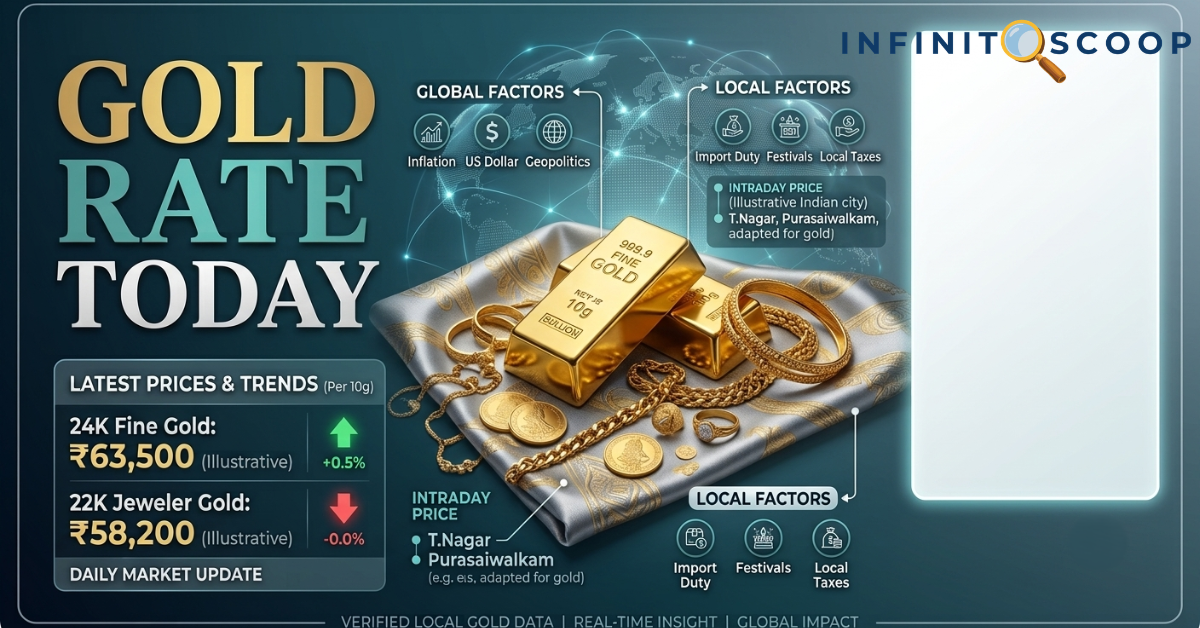
Are you keeping a close eye on the official gold rate today? Whether you want to buy a timeless piece of jewelry, sell off an old family asset, or diversify your investment portfolio, tracking live commodity numbers is highly essential. The global economy moves fast, causing precious metal values to shift every single hour. Knowing these real-time price adjustments helps you make smart financial choices at the absolute perfect moment.
Precious metals carry unique financial weight because they serve as both luxury consumer goods and reliable emergency cash reserves. When you track market trends from your smartphone, you gain a distinct advantage over casual shoppers. This comprehensive guide breaks down exactly what drives local prices, how to avoid common retail traps, and how to maximize your cash returns. Let us explore how the modern commodity landscape operates right now so you can trade with absolute confidence.
Why Monitoring the Gold Rate Today Gives You a Wealth Advantage
Checking the gold rate today does more than just show you a random number on a financial screen. It acts as a direct window into the overall health of the international financial ecosystem. When stock markets feel volatile or political tensions rise, large institutional investors drop risky shares and buy physical hard assets to lower their risk. This sudden flight to safety pushes physical metal rates up quickly, creating a domino effect that hits your local jewelry shop within hours.
Currently, global spot prices fluctuate around $2,350 to $2,400 per ounce, depending on daily central bank announcements. These baseline figures translate into specific retail costs per single gram or pennyweight at your local bullion counter. Sophisticated buyers use quiet market consolidation periods to accumulate physical coins before the next economic demand wave drives retail costs upward. Staying updated prevents you from accidentally buying at an artificial price peak.
Additionally, watching daily commodity updates protects your personal budget from unfair dealer markups. Retail showrooms often blend the raw value of the metal with high processing fees and custom margins. When you walk into a store knowing the exact live benchmark price, you hold the upper hand during any transaction. It allows you to separate the true value of the material from subjective merchant markups effortlessly.
The Core Forces Moving Daily Precious Metal Markets
Several powerful economic engines drive the daily movements of the bullion market. When you know how to read these moving pieces, you can easily anticipate where the numbers might head next. Here are the core factors that influence the market numbers:
- Central Bank Policies: Federal reserve systems worldwide manage massive physical metal reserves to back their paper currencies. When central banks buy large volumes to secure their balances, global supply shrinks and pushes the daily rate higher.
- Inflation Rates: Paper money naturally loses purchasing power over time due to inflation. Because physical metals have a finite supply, they tend to hold their true value when consumer grocery and energy bills climb.
- The Strength of the US Dollar: Precious metals trade globally in US dollars. A weaker dollar makes the metal cheaper for international buyers using other currencies, which triggers massive buying rushes that lift the spot price.
- Interest Rate Adjustments: When banks lift interest rates on savings accounts and bonds, investors often pivot to those fixed-income options. This shift cools down the commodity market, making metals cheaper for a brief period.
Studying these trends ensures you approach the market like a professional trader rather than an emotional buyer. You can focus on building your assets during calm economic periods when public interest drops off. This patience helps you secure much lower total costs over time.
Purity Classifications and Investment Models Explained
Choosing the correct metal purity level determines how quickly and easily you can convert your assets back into cash later on. The retail marketplace offers several distinct choices designed for completely different financial goals.
Pure bullion features a 99.9% purity score and carries a certified 24-karat designation. Refiners use this soft variety exclusively to strike investment bars and coins because it offers the best price per gram with minimal dealer markups. You cannot wear 24K items easily because the metal bends under minimal physical pressure.
For wearable luxury, the industry relies on alloys like 14-karat and 18-karat gold. Manufacturers mix pure gold with harder metals like copper, nickel, or silver to increase strength and durability. While beautiful for daily wear, these items carry high craftsmanship fees that reduce your eventual investment return when reselling.
The table below outlines how common purity ratings translate into physical metal percentages and typical retail uses:
| Karat Rating | Pure Gold Percentage | Common Stamp Identification | Primary Commercial Use Case |
| 24 Karat | 99.9% Pure | 999 or Fine Gold | Investment Bars, Minted Coins, Central Bank Reserves |
| 22 Karat | 91.6% Pure | 916 Stamp | Traditional Bridal Ornaments, Heavy Bangles |
| 18 Karat | 75.0% Pure | 750 Stamp | Fine Diamond Settings, Luxury Watches, Gemstone Rings |
| 14 Karat | 58.3% Pure | 585 Stamp | Everyday Wedding Bands, Minimalist Chains, Piercings |
If you dislike handling physical vault logistics, you can trade paper-backed alternatives like exchange-traded funds (ETFs) or digital contracts. Digital assets allow you to buy or liquidate holdings instantly on standard stock applications without paying for personal home security upgrades. However, traditional buyers still love physical coins because they eliminate digital banking risks entirely, keeping your wealth private, tangible, and accessible.
Action Plan: How to Purchase Precious Metals Safely
When you venture out to make a physical purchase at a retail showroom or online bullion dealer, follow this checklist to secure a transparent deal:
- Confirm the Real-Time Spot Price: Always open a trusted financial website to check live market rates right before stepping inside a shop. This benchmark lets you immediately spot a merchant who is trying to overcharge you on the base material.
- Look for Certified Hallmarks: Inspect the physical item closely under a magnifying glass. Ensure the official purity stamp, manufacturer logo, and weight verification details are cleanly laser-etched into the metal surface.
- Drive Down the Making Charges: Retail shops add crafting fees to their decorative items. Always voice your counteroffers boldly, keeping making charges for plain investment coins as close to the spot rate as possible.
- Demand an Itemized Invoice: Never accept an unofficial cash slip. A certified invoice listing the precise item weight, karat purity score, and separate labor fees is your only legal protection when you decide to resell your metal later.
Using this direct plan keeps you safe from common trading errors and protects your investment capital from shady business practices. Once you bring your bullion home safely, your main job is keeping it secure.
Summary / Final Thoughts
Watching the gold rate today gives you the precise insights required to navigate the physical commodity market with absolute confidence. By keeping up with international market shifts, choosing certified pure bullion, and cutting down unnecessary merchant making charges, you can build a highly resilient financial buffer. Watch for global central bank moves, deal exclusively with vetted local jewelers, and buy your metal when prices stabilize during flat market cycles. Approaching the bullion market with a practical mind ensures you avoid the classic mistakes that trap emotional retail buyers. With the right research, precious metals can serve as a highly rewarding component of your long-term wealth strategy.
Frequently Asked Questions (FAQs)
Why do retail jewelry stores charge more than the official spot price?
Retail showrooms add design fees, manufacturing labor costs, store overhead, and profit margins to the base metal price. To get the most metal for your money, buy plain bullion bars or investment coins instead of decorative jewelry.
How can I verify the purity of my gold ornaments at home?
While professional testing is best, you can use a strong magnet as an initial check. Pure gold is completely non-magnetic. If your item sticks to a magnet, it contains a high concentration of base metals or is simply gold-plated.
Is it smarter to buy physical gold or invest in gold ETFs?
Buy physical gold if you want a tangible, private asset that you can hold during a severe banking crisis. Choose ETFs or digital gold if you want to profit from quick price changes without worrying about vault storage fees or theft risks.
Does the daily gold rate change on weekends?
No, major commodity markets close on Friday evening and reopen on Monday morning. The retail prices you see over the weekend usually reflect the final closing price from Friday’s trading session.